
Injection & Pour Foam Insulation
Injection and pour foam for enclosed cavities, marine and custom applications
Injection and pour foam is used to fill enclosed cavities, voids and compartments for insulation, buoyancy and specialist applications.
Injection and pour foam uses
Common applications include wall and floor cavities, marine compartments, pontoons, fabricated panels and other specialist projects.
Enclosed cavities
Voids, panels and compartments that can be reached through suitable access points.
Marine compartments
Fish holds, pontoons, buoyancy compartments and other enclosed marine voids.
Custom applications
Fabricated items, equipment and specialist projects requiring foam filling.
Common applications
Injection and pour foam can be used across marine, HVAC, industrial, agricultural and custom projects.
Void and cavity filling
Defined cavities where access points can be arranged for the foam application.
Custom fabrication
Fabricated panels, insulated components, equipment housings and specialist assemblies designed to accept expanding polyurethane foam.
Industrial and agricultural uses
Project-specific cavities and equipment requiring insulation, separation or foam filling.
HVAC, tanks and pipework
Injection foam insulation for selected HVAC services, tanks and pipework with an outer casing.
Boat hulls, pontoons and enclosed marine compartments
Pour foam can be used in buoyancy compartments, pontoons, floats and other enclosed marine voids. Send us the project details and we can discuss the application.
- Boat hull and buoyancy compartments
- Pontoons, floats and fabricated marine sections
- Defined voids where access and venting can be planned
- Repairs or alterations involving existing foam
Have a marine application? Send us photographs and a short description of the project. We can talk through the next step with you.
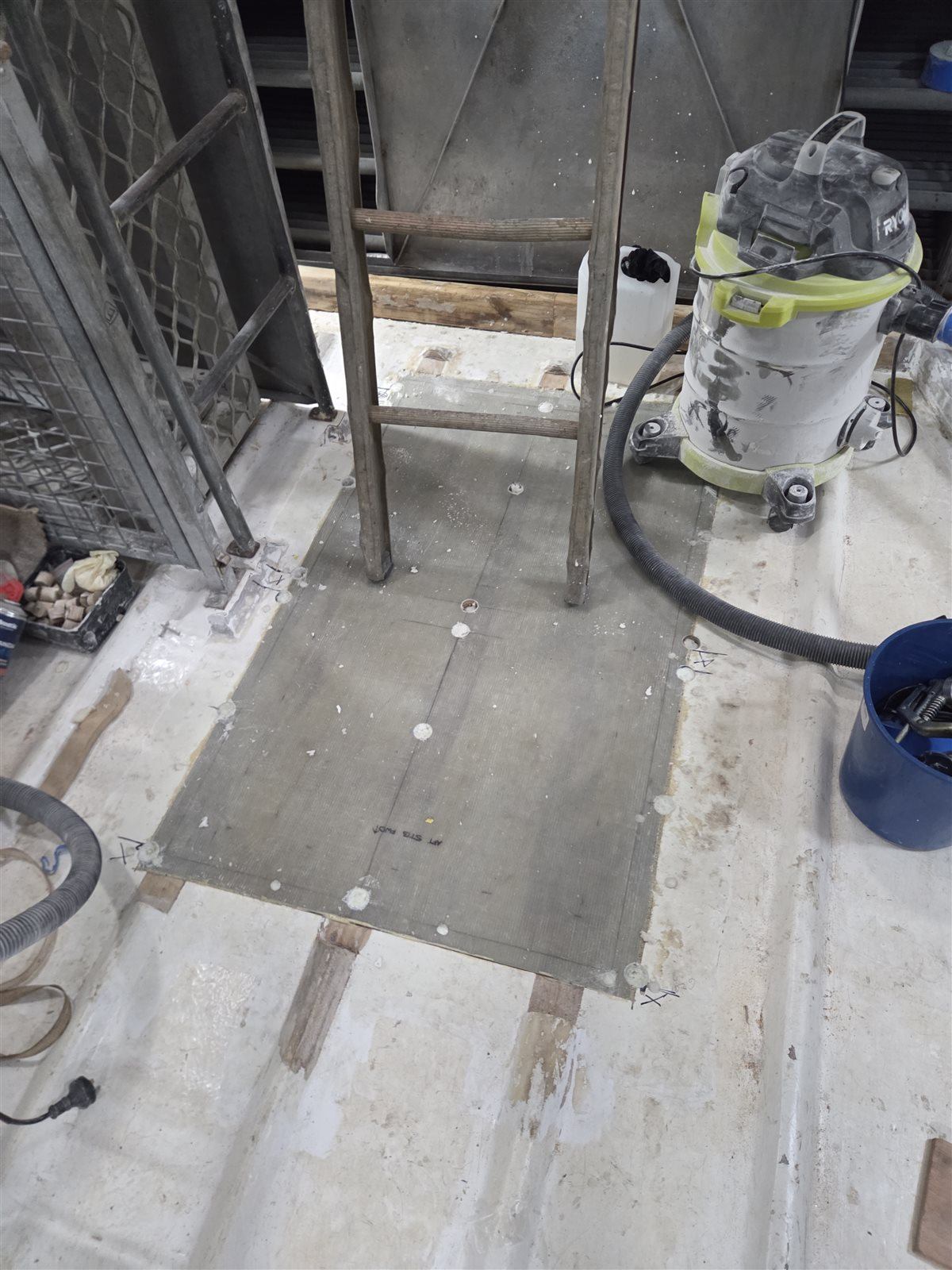
Commercial fishing vessel fish hold
Foam injected into the floor cavity between the diesel tank and fish hold.
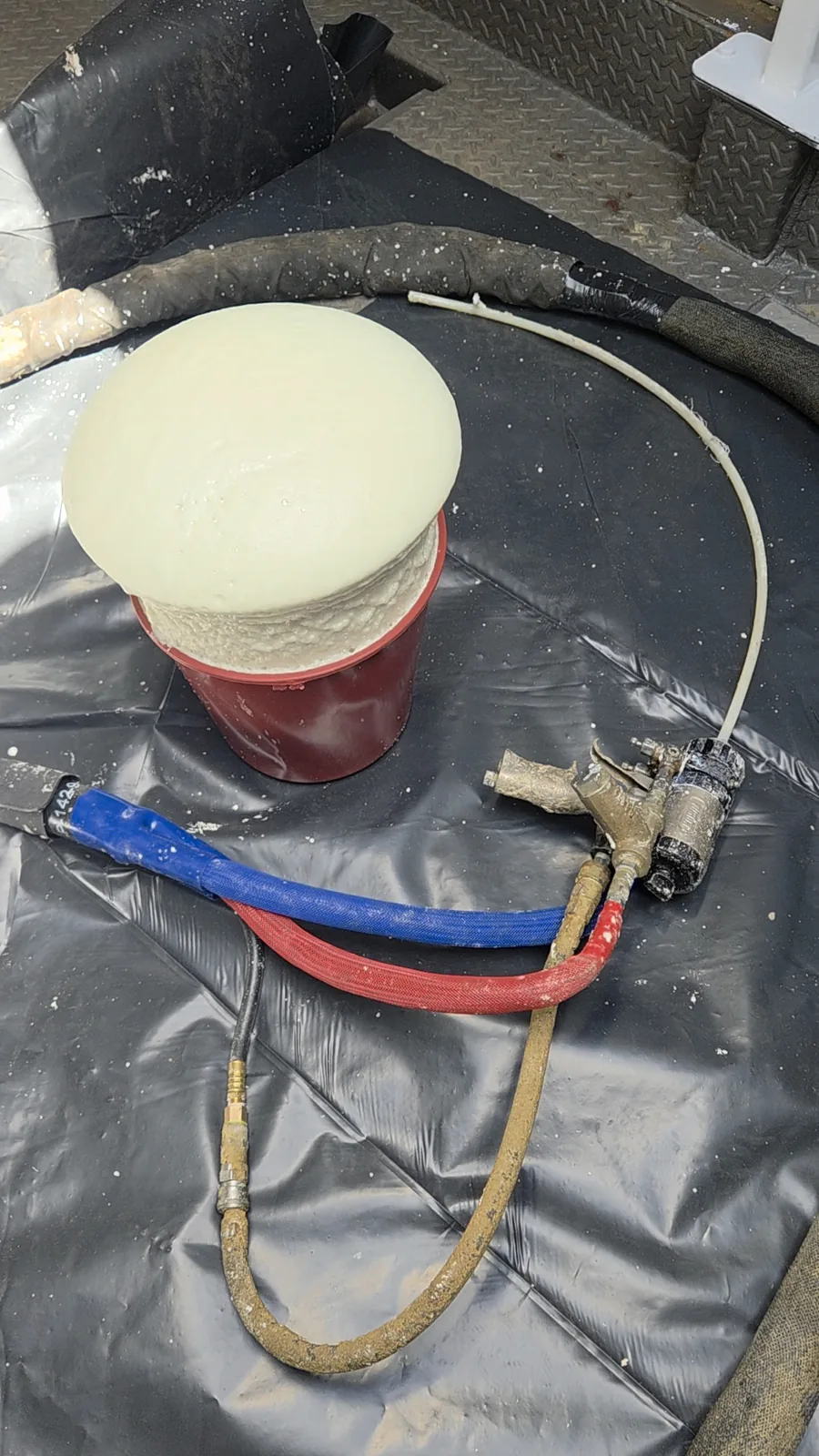
A simple foam test before work begins
This photograph shows a small test completed with the application equipment. It gives us a quick visual check that the foam is mixing and expanding as expected before we move on to the job itself.
Where required, the test also helps us plan how the foam will be introduced into the cavity.
Foam expansion test
A routine check completed before application.
Our process
Review the application
We discuss what is being filled, why foam is required, the surrounding material and whether the cavity is new, existing or part of a repair.
Confirm access and volume
Available drawings, dimensions, photographs and access points are reviewed so the likely foam quantity and filling sequence can be considered.
Discuss the cavity
We talk through any details you know about the cavity, existing foam and previous work.
Plan fill and vent points
Injection openings and air-release points are positioned to suit the cavity shape and the expected direction of foam rise.
Condition and test material
Material temperature and mixing are controlled, with an expansion check completed where appropriate before filling begins.
Complete the foam fill
Foam is introduced in stages suited to the cavity and the project.
The access and surface determine the method
Spray foam
Best where the substrate is exposed and the applicator can build a continuous insulation layer directly onto the surface. Common examples include roofs, walls, containers and underfloor areas.
Injection or pour foam
Used for enclosed cavities and voids that can be reached through planned openings. Contact us and we can help decide whether this method suits the project.
Could injection foam suit your home?
Some homes may be suitable for wall injection foam. Get in touch and tell us what you know about the property and the wall construction.
We can ask a few practical questions, review any photos or plans you have and let you know the next step.
You do not need to have all the answers before contacting us. A conversation is the best place to start.
Injection and pour foam questions
Can foam be injected into existing walls?
Possibly. Send us photographs and any details you know about the walls, and we can discuss whether injection foam may suit the home.
Is pour foam used in boats?
Yes. Pour foam can be used in buoyancy compartments, pontoons and other marine voids. Contact us to discuss the project.
What information is needed for a quote?
Photographs, approximate dimensions, the location and a short description are a good starting point.
What to send us
Send what you have. Photographs and approximate dimensions are a good starting point.
- Photographs of the item or cavity
- Internal dimensions or estimated volume
- Site location and access
- Construction material and panel thickness
- Existing openings and possible vent points
- Marine, insulation, buoyancy or void-filling purpose
- Previous foam or repair work, if known
- Drawings or fabrication details where available
Have a cavity or specialist foam-filling application?
Send us photographs, dimensions and a short explanation of what you need the foam to achieve. We can confirm whether injection, pour foam or direct spray application is the better starting point.