

Container Insulation
Control heat and condensation without sacrificing valuable internal space
Closed-cell spray foam bonds directly to prepared container steel and creates a continuous insulation layer around ribs, corners and junctions. We insulate containers used for storage, workshops, site facilities, accommodation, agricultural use and specialist temperature-sensitive applications.
Steel responds quickly to outside temperatures
An uninsulated container can become extremely hot in summer, cold in winter and prone to condensation when warm internal air reaches the steel shell. Insulation slows heat transfer and separates the inside environment from the cold metal surface.
Condensation control
Closed-cell foam limits warm, moist air reaching cold steel and reduces the conditions that cause dripping and surface condensation.
Temperature stability
A continuous insulation layer slows heat moving through the roof and walls, making the container easier to heat, cool or use through changing weather.
Protection for contents
Reducing temperature swings and condensation helps protect tools, stock, furniture, machinery, documents and other moisture-sensitive items.
Insulation for storage, work and converted spaces
The intended use affects the foam thickness, ventilation, framing, electrical work, internal linings and whether the floor also needs attention.
Storage and workshops
Tool storage, machinery, farm supplies, furniture, stock and workshop containers where controlling condensation and radiant heat is the main priority.
Site and commercial facilities
Site offices, mobile units, equipment rooms and other working spaces that need more stable temperatures and a practical internal fit-out.
Accommodation and conversions
Tiny homes, sleepouts and other occupied conversions where insulation must be coordinated with consent requirements, ventilation and interior linings.
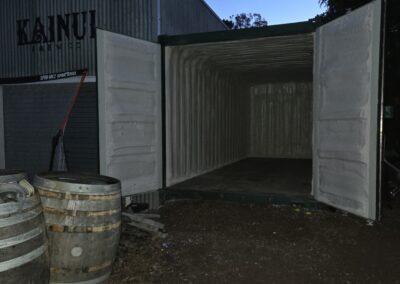
Direct application to container steel
Foam follows the corrugations and junctions, reducing hidden air gaps behind the insulation layer.
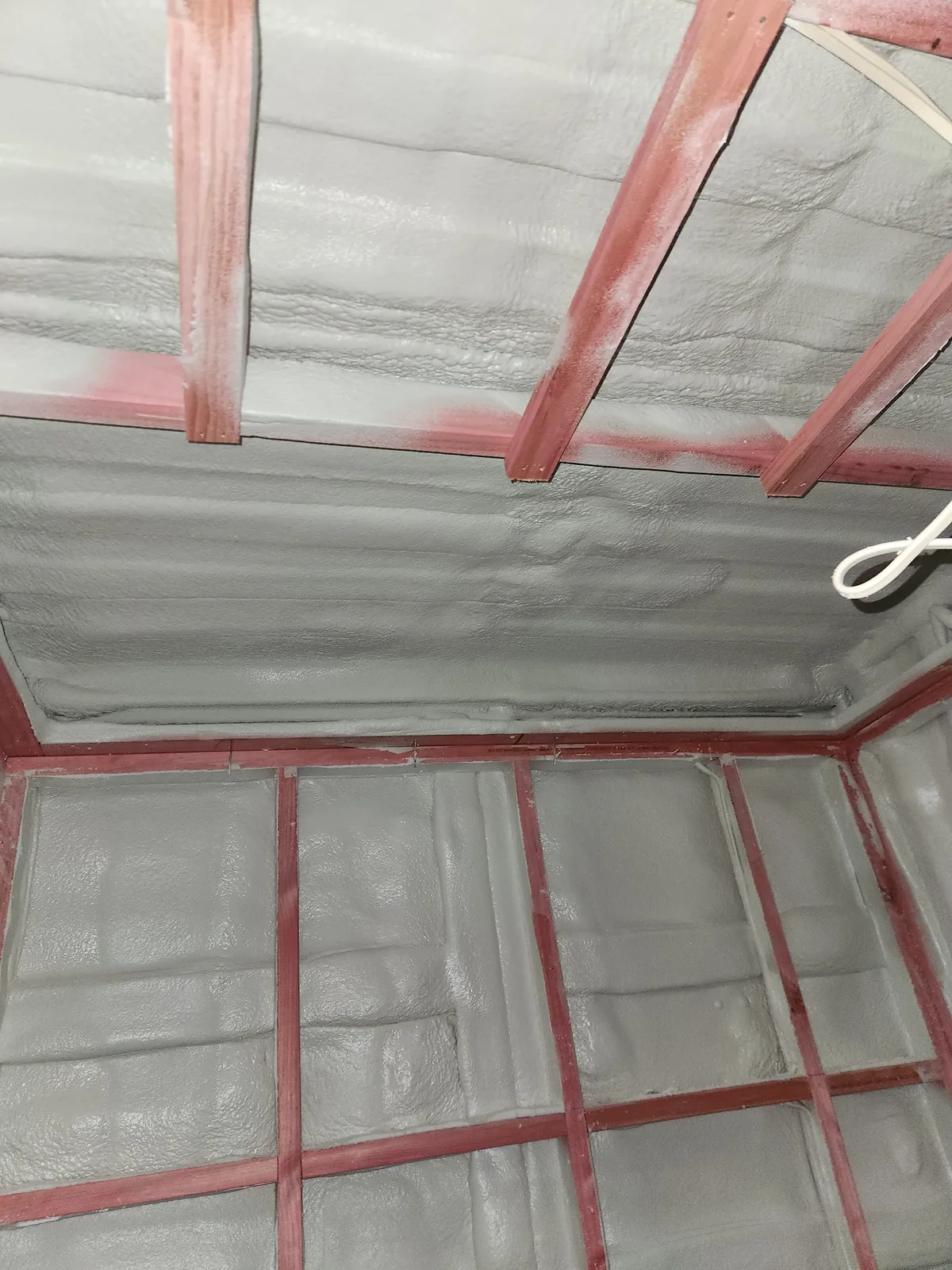
Roof and wall coverage
The scope can include the roof, walls and underfloor where access and support conditions allow.
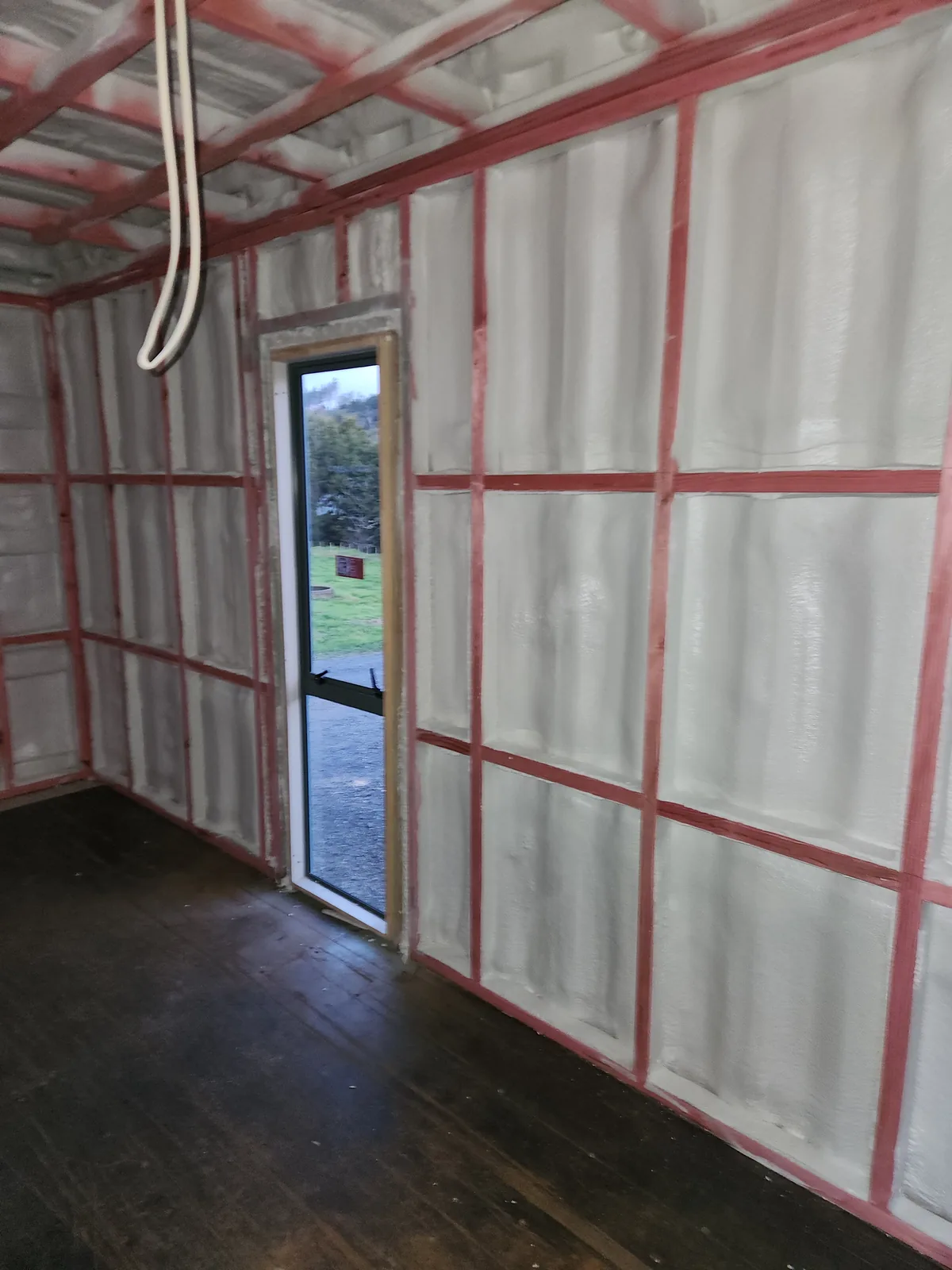
Planned around the fit-out
Framing, wiring, vents, doors and internal linings should be considered before the foam is applied.
The right thickness depends on the container’s use
A basic storage container does not have the same requirements as an occupied conversion or temperature-sensitive space. Climate, internal lining depth and the surfaces included in the scope also affect the result.
- Storage containers: generally 40 mm or more
- Living-space walls: commonly 40–50 mm
- Living-space roof areas: commonly 50–75 mm
- Specialist or temperature-controlled uses require project-specific review
Design note: these are practical starting points, not universal specifications. Living-space conversions and consented work should have the final thermal, ventilation and lining requirements confirmed through the project design.
How container insulation is planned and installed
Good access and preparation matter as much as the foam itself. We confirm the intended use and scope before equipment is mobilised.
Container review
We discuss the condition, size, location, intended use, access, ventilation and whether framing or internal linings are planned.
Surface preparation
The steel must be dry, clean and suitable for adhesion. Leaks, loose rust, flaking paint, oil and contamination are addressed before spraying.
Masking and protection
Doors, locks, vents, floors, electrical components and other areas outside the spray scope are protected from overspray.
Foam application
Closed-cell foam is applied directly to the specified roof, walls and underfloor areas at the agreed thickness.
Inspection and trimming
Coverage is checked and the foam is trimmed where the framing or following lining system requires a clear face.
Fit-out
Once the agreed work is complete, following trades can install linings and other elements in accordance with the conversion design.
Items to resolve before insulation
Foam should not be used to cover problems that need repair. Planning these details first produces a cleaner installation and reduces rework.
Container condition
The container needs to be dry and weather-tight. Holes, leaks, loose rust, flaking paint, oil, grease and other contamination may require repair or preparation before application.
Services and ventilation
Electrical wiring, framing, penetrations and ventilation should be planned before spraying. Occupied containers still need deliberate fresh-air and moisture control.
Container insulation questions
Will spray foam stop condensation?
It helps by insulating the internal steel surface and limiting warm, moist air reaching cold metal. Ventilation and control of internal moisture still matter, particularly in occupied or frequently opened containers.
Why use closed-cell foam in a container?
Closed-cell foam bonds directly to the corrugated steel, provides strong insulation at practical thicknesses and resists moisture absorption. This makes it well suited to the limited space and condensation risks inside containers.
Can the underfloor be insulated?
Yes, where the container is safely raised and supported with suitable access. As a practical guide, approximately 700 mm or more clearance may be required for safe application.
Can the foam be left exposed?
It may be suitable for some storage applications. Occupied or finished spaces are normally lined according to the project design and compliance requirements. Foam exposed to UV also needs protection.
Can foam be sprayed over rust?
Not over loose rust, flaking coatings, oil or contamination. The surface must be stable, clean, dry and suitable for adhesion before foam is applied.
How much does container insulation cost?
Pricing depends on container size, foam thickness, included surfaces, access, preparation and location. Send the container dimensions, intended use and photographs for an application-specific quote.
What to send us
Clear information helps us confirm the correct scope and whether any preparation is required first.
- Container size and quantity
- Site location
- Storage, workshop, office or living use
- Roof, walls and underfloor scope
- Internal framing or lining plans
- Current photographs
- Access around and beneath the container
- Preferred timing
Need a practical insulation plan for a container?
Send us the container size, intended use, location and a few photographs. We can confirm what else is needed before preparing a quote.