
Marine Insulation
Spray foam, injection and pour foam for boats, vessels and marine compartments
LJ Solutions installs polyurethane foam insulation for marine applications, from exposed hull and cabin surfaces to fish holds, pontoons and enclosed compartments.
Marine insulation for commercial fishing vessels, boats, pontoons and marine projects
We install foam in commercial fishing vessels, recreational boats, pontoons and other marine projects. The right method depends on whether the area is an exposed surface or an enclosed compartment.
Hulls, cabins and decks
Closed-cell spray foam for suitable exposed internal surfaces where a continuous insulation and air-control layer is required.
Fish holds and cold spaces
Project-specific insulation for holds, refrigerated areas and temperature-sensitive marine compartments.
Engine and service spaces
Insulation for bulkheads, compartments and service areas.
Pontoons and buoyancy voids
Injection or pour foam for cavities, floats, pontoons and enclosed marine sections.
Spray foam or injection and pour foam?
Exposed surfaces can be sprayed directly. Enclosed compartments can be filled using injection or pour foam.
Closed-cell spray foam
Used where the substrate is exposed and the applicator can build a continuous layer directly onto the prepared surface. It can follow curves, framing and complex shapes while limiting unwanted air movement.
Injection and pour foam
Used for selected enclosed cavities and compartments where fill points, venting, cavity volume and the direction of foam rise can be planned. Existing foam and previous repairs must also be considered.
Managing heat transfer and condensation in marine spaces
Closed-cell foam helps limit heat transfer, air leakage and condensation against cold marine surfaces.
- Continuous coverage around curves and framing where access permits
- High insulation value where available space is limited
- Reduced air movement through gaps and difficult junctions
- Project planning around coatings, linings and service penetrations
Commercial fishing vessel fish hold
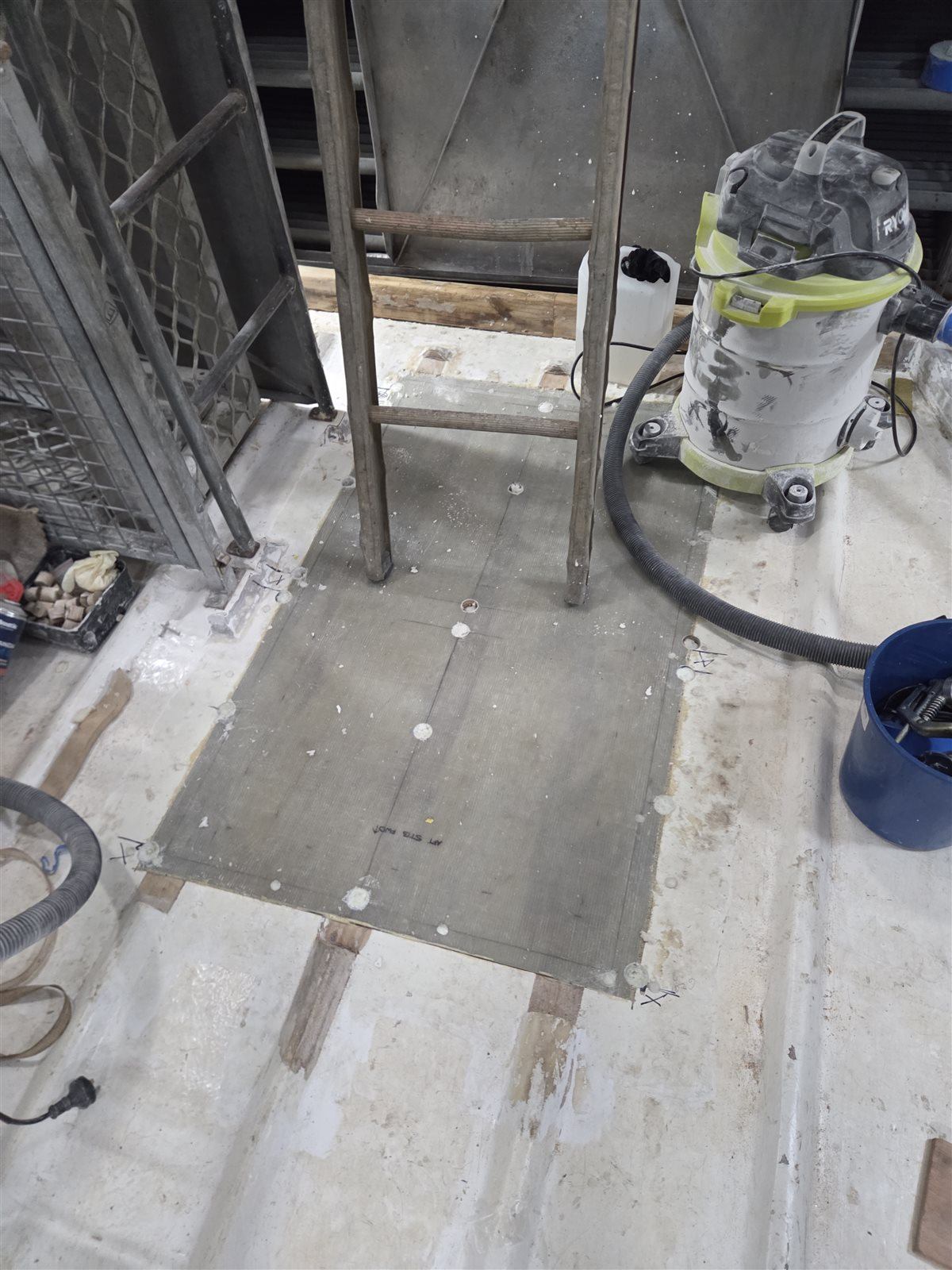
Injection foam was introduced through planned access points into the floor cavity between the diesel tank and fish hold. The cavity, access, venting and filling sequence were reviewed before application.
Planned cavity access
Access points positioned across the fish hold floor for controlled foam introduction and air release.
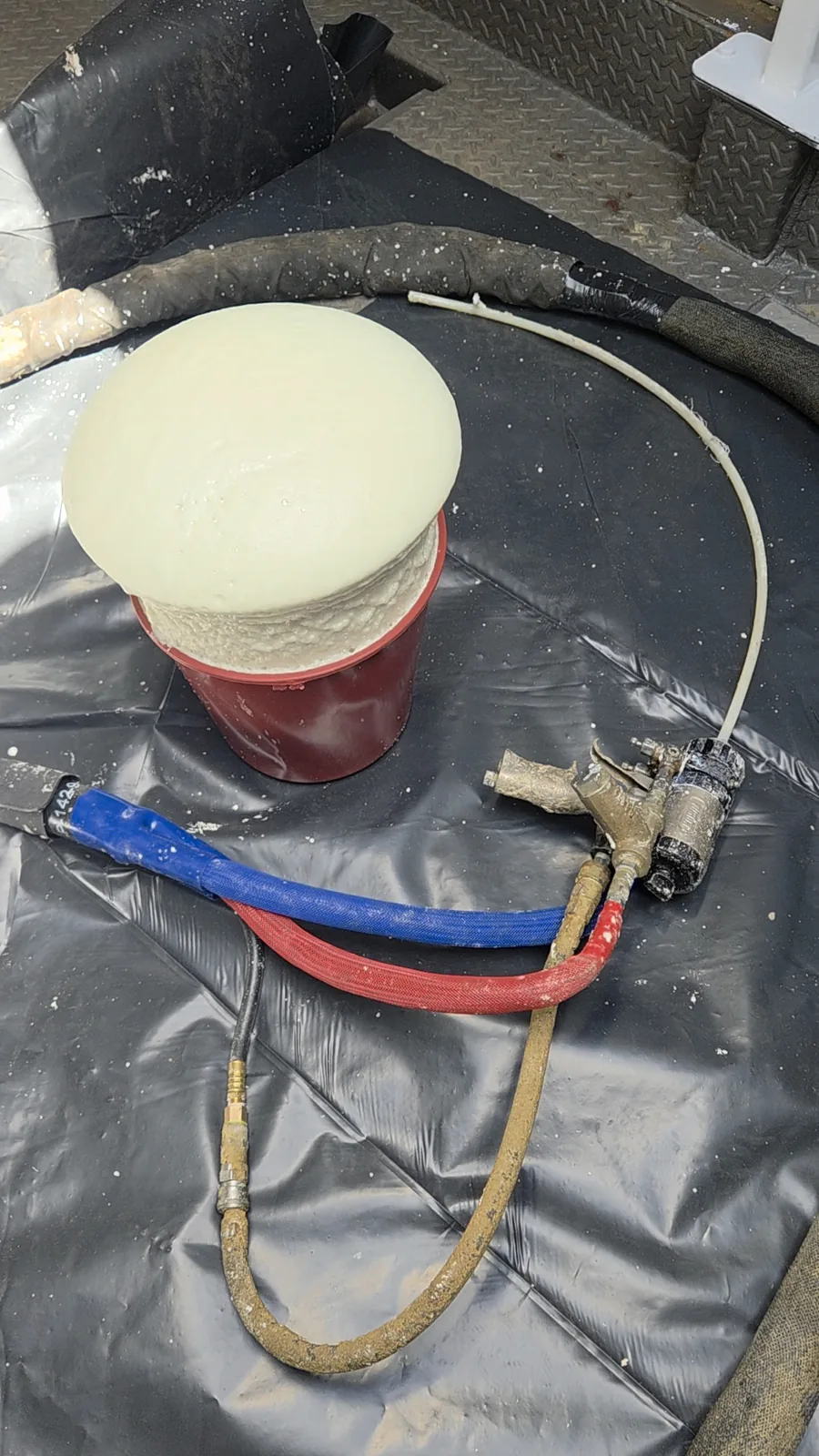
Material expansion check
A small test can provide a visual check of mixing and expansion before the foam fill begins.
Planning a marine insulation project
We start with the vessel, the space and what the insulation needs to achieve.
Review the application
We discuss the vessel type, location, intended use and whether the project is new construction, a refit or a repair.
Assess surfaces and cavities
Photographs, drawings and dimensions help us understand substrates, access, existing coatings, linings and foam.
Confirm performance needs
We consider thermal control, condensation, buoyancy or cavity filling, plus any project-specific documentation or specifications.
Select the method
Direct spray, injection or pour foam is proposed according to the exposed surface or enclosed cavity and the available access.
Plan preparation
Masking, surface preparation, ventilation, fill and vent points, protection and sequencing are agreed before work begins.
Complete the application
Material and application conditions are controlled to suit the selected system and the project plan.
Marine insulation questions
Which foam is best for a boat?
There is no single answer for every vessel. Exposed surfaces may suit closed-cell spray foam, while defined enclosed cavities may suit injection or pour foam. Substrate, access, available depth, moisture, linings and the purpose of the compartment all matter.
Do you install foam in pontoons and buoyancy compartments?
We assess selected pontoons, floats, hull voids and buoyancy compartments. The cavity must be understood well enough to plan volume, access, venting, expansion and any vessel-specific performance or regulatory requirements.
Can you insulate an existing vessel?
Yes. We insulate existing vessels where the surfaces or compartments are accessible. Send us photographs and approximate dimensions so we can recommend the right approach.
What to send us
Marine work is quoted from the actual vessel and application. Send what you have and we will confirm what else is needed.
- Vessel type and project location
- Photographs of the surfaces or compartments
- Approximate dimensions or cavity volume
- Drawings, specifications or required R-value
- Substrate and existing coating details
- New build, refit or repair status
- Access, linings and service penetrations
- Thermal, condensation, buoyancy or filling objective
Discuss your marine insulation project
Send photographs, dimensions and a short explanation of the vessel, space and required outcome. We can confirm whether spray foam, injection foam or pour foam is the right starting point.