
Technical overview
About Polyurea
What polyurea is, how it is applied and where it fits
Polyurea is a fast-reacting spray-applied elastomer used within purpose-designed lining, waterproofing and protective coating systems. Its performance depends on the formulation, substrate preparation, primers, detailing and application controls—not the product name alone.A technical reference for clients, estimators, consultants and asset owners
Plain-language explanation
What is polyurea?
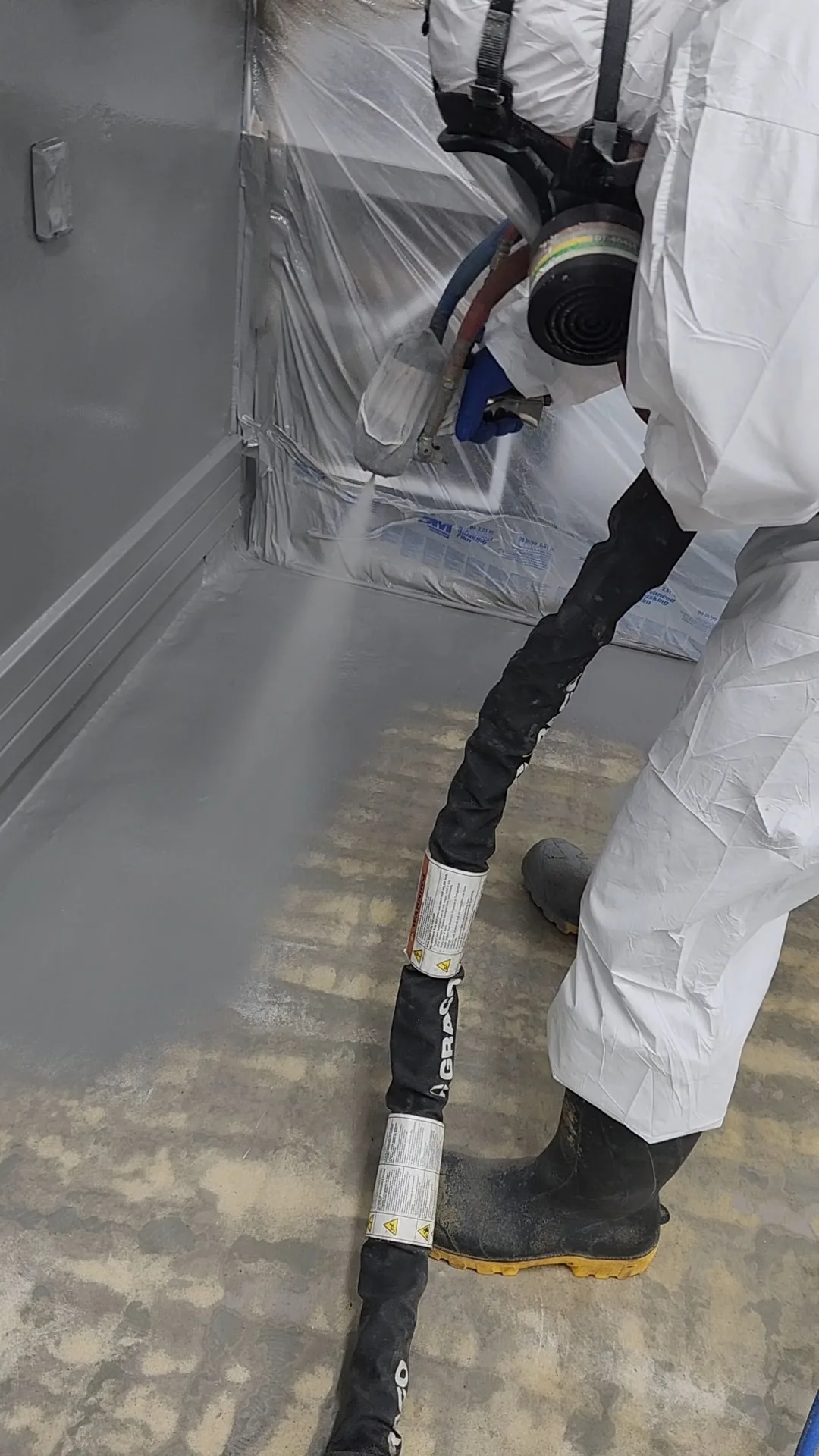
Polyurea is formed when two liquid components react at the spray gun and rapidly create a tough, flexible elastomer. The material is normally installed with heated, high-pressure plural-component equipment so the components are accurately proportioned, conditioned and mixed during application. Once applied, it forms a continuous coating that follows the shape of the prepared surface. The required thickness, texture, colour, topcoat and reinforcement depend on the selected system and its intended service.Polyurea is not one universal product
Pure polyurea, hybrid systems and polyurethane-based linings can have very different physical properties, chemical resistance, application windows and certification. The exact product and complete system must be matched to the job.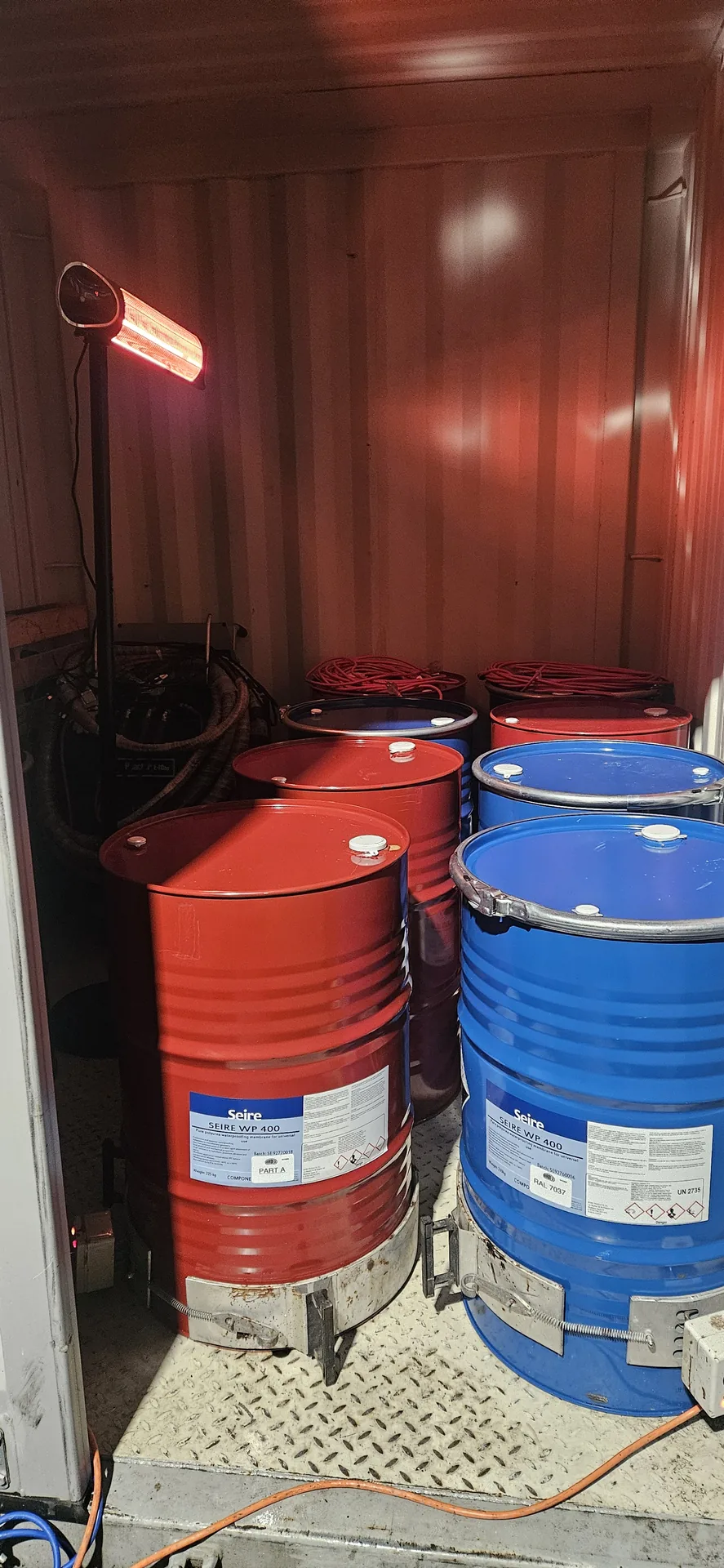
Application process
How a spray-applied polyurea system is installed
The visible spray application is only one part of the work. Preparation, environmental control, equipment settings and detailing determine whether the lining can perform as intended.1. Substrate preparation
Concrete, steel, timber, existing coatings and other substrates require different preparation. Contamination, moisture, corrosion, laitance and surface defects need to be addressed before coating.2. Priming and detailing
The specified primer, repairs, joints, penetrations, terminations and transitions are completed to suit the substrate and lining design.3. Material conditioning
The components are stored and conditioned to suit the product requirements. The proportioner, heated hoses and spray gun are checked before application.4. Controlled spraying
The material is applied in controlled passes to build the nominated thickness while maintaining the required processing conditions and spray quality.5. Inspection and testing
Checks can include environmental records, visual inspection, thickness measurements and holiday testing where required by the specification.6. Handover
Return-to-service timing and project records depend on the system, exposure and documentation agreed for the job.
Why it is specified
Where polyurea can perform well
These are system-level advantages, not guarantees for every formulation. Product data and project conditions still govern suitability.Seamless and conforming
Spray application can create a continuous lining across complex shapes, vertical surfaces, junctions and properly detailed penetrations.Rapid reaction and return to service
Many polyurea systems gel and become tack-free quickly, which can reduce the application and shutdown window when the complete build-up allows it.Impressive elongation
Depending on the formulation, some polyurea systems can achieve elongation of up to approximately 500%. This ability to stretch can help a correctly designed lining accommodate vibration and movement, but it does not replace proper joint design, crack treatment or substrate preparation. The selected product’s technical data still governs the project.Abrasion and water resistance
Polyurea systems are available for wet service, containment and hard-wearing environments, subject to the selected product and exposure.
Important limitations
Where careful specification matters
Fast cure does not remove the need for good preparation or a suitable design. Polyurea can lock in problems just as quickly as it forms the finished membrane.Chemical compatibilityResistance varies by formulation, chemical, concentration, temperature and exposure time.
Moisture and environmental conditionsSubstrate moisture, condensation and dew point can affect adhesion and must be managed to the system requirements.
UV and colour stabilitySome aromatic systems can change colour or chalk in sunlight. A compatible UV-stable finish may be required where appearance matters.
Details and terminationsJoints, movement, edges, penetrations and transitions require deliberate design; a seamless field coat does not correct poor detailing.
Recoat and repair windowsOnce the recoat window has passed, cleaning, abrasion and additional priming may be required before new material is applied.
System selection
Pure polyurea, hybrids and related linings
Several fast-cure spray elastomer technologies sit under similar marketing language. We select from the available system types according to the substrate, exposure and required result.Pure polyurea
Rapid-reacting elastomeric systems used for suitable waterproofing, containment, wear and protective lining applications.Polyurea hybrids
Hybrid formulations combine polyurea and polyurethane chemistry to provide a different application window and balance of properties.Polyurethane and specialist coatings
Some chemical, corrosion or wear exposures are better served by polyurethane or another protective coating rather than polyurea.
Common questions
Polyurea questions answered
Is polyurea waterproof?
A suitable polyurea system can form a waterproof membrane when it is applied continuously at the specified thickness over a correctly prepared and detailed substrate.Can it be sprayed over any surface?
No. The substrate must be assessed and prepared, and the correct primer or intermediate system used. Some materials are unsuitable without specialised treatment.Is all polyurea suitable for potable water?
No. Only the exact lining system supported by the required drinking-water contact certification should be used for that application.Is polyurea always the best coating?
No. Exposure, movement, chemical resistance, appearance, access and budget can make another coating system more appropriate.How long does a polyurea lining last?
Service life depends on system selection, preparation, thickness, detailing, exposure and maintenance. It should not be stated from the word “polyurea” alone.
Application pages
Explore polyurea by project type
The service pages contain the application-specific information. This page remains the shared technical reference.Tank, Bund & Containment Linings
Containment, immersion and water or wastewater assets. View servicePotable Water Tank Linings
Certified lining systems for contact with drinking water. View servicePolyurea Projects
Selected work showing real applications and completed finishes. View projectsDiscuss another application
Send the asset details and exposure requirements for an initial review. Contact LJ Solutions
Technical enquiries
Discuss Your Project