
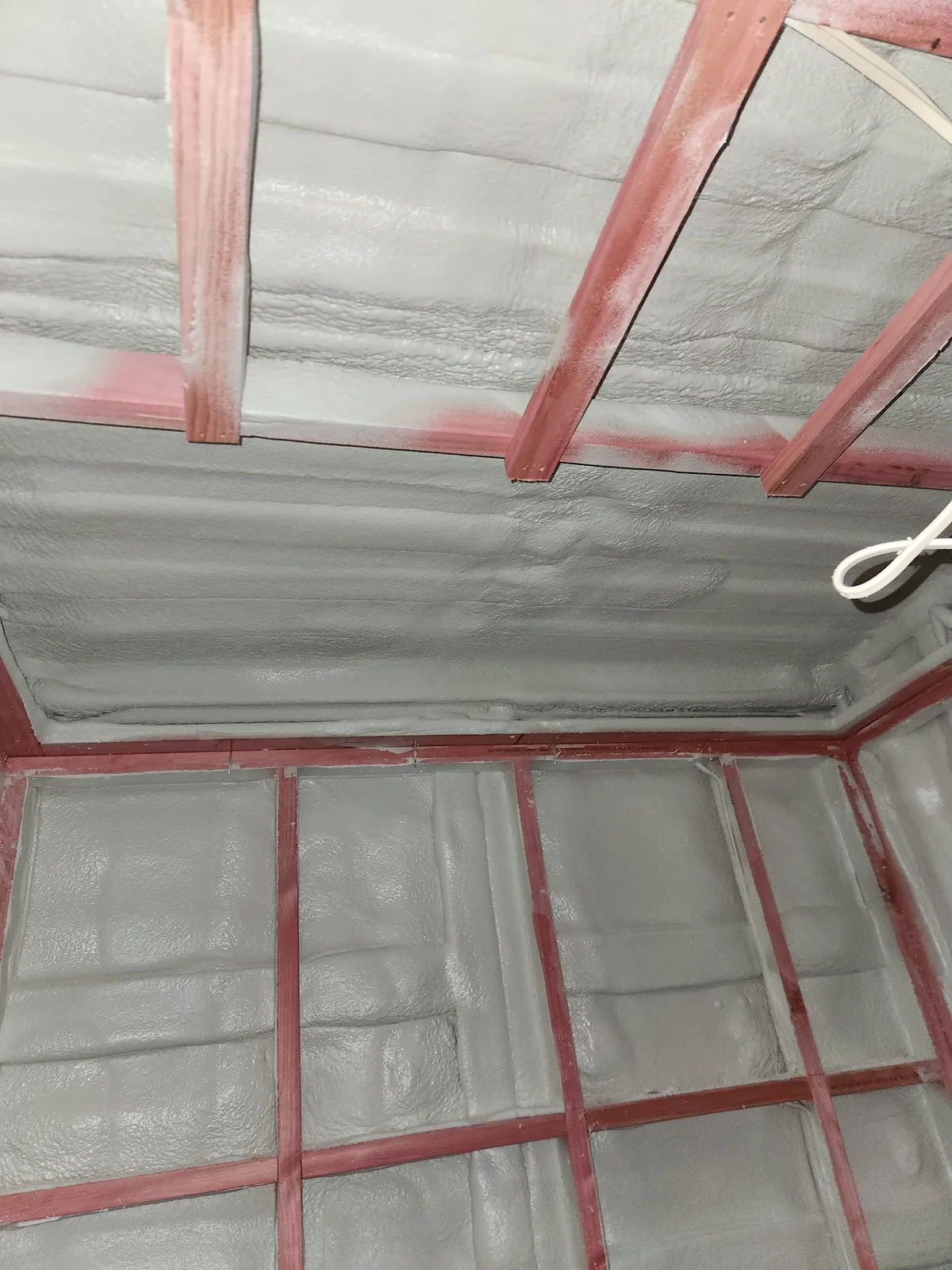
Spray Foam Insulation for Containers
Bonded to the steel. Built around your container.
Reduce condensation. Keep more usable space. Insulate before you line.
Request a quoteCall LJ SolutionsLiving, working or storing?
Container homes and living spaces, workshops, storage, offices and site offices all need different insulation plans. We also insulate climate-controlled spaces such as grow rooms and mushroom rooms, alongside their ventilation and temperature-control design.
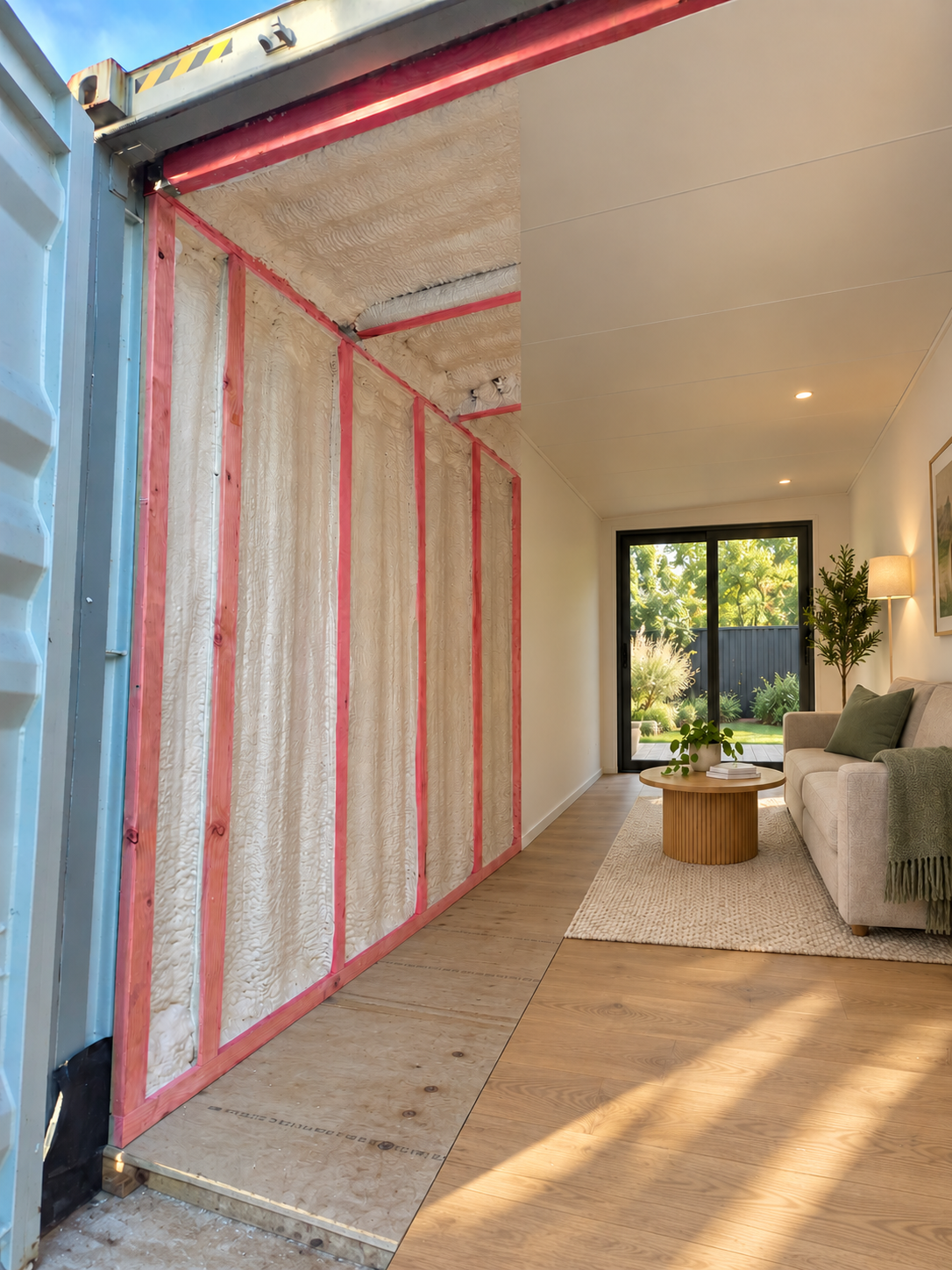
Living spaces & container homes
Plan foam before the lining, alongside ventilation, services and your conversion design.
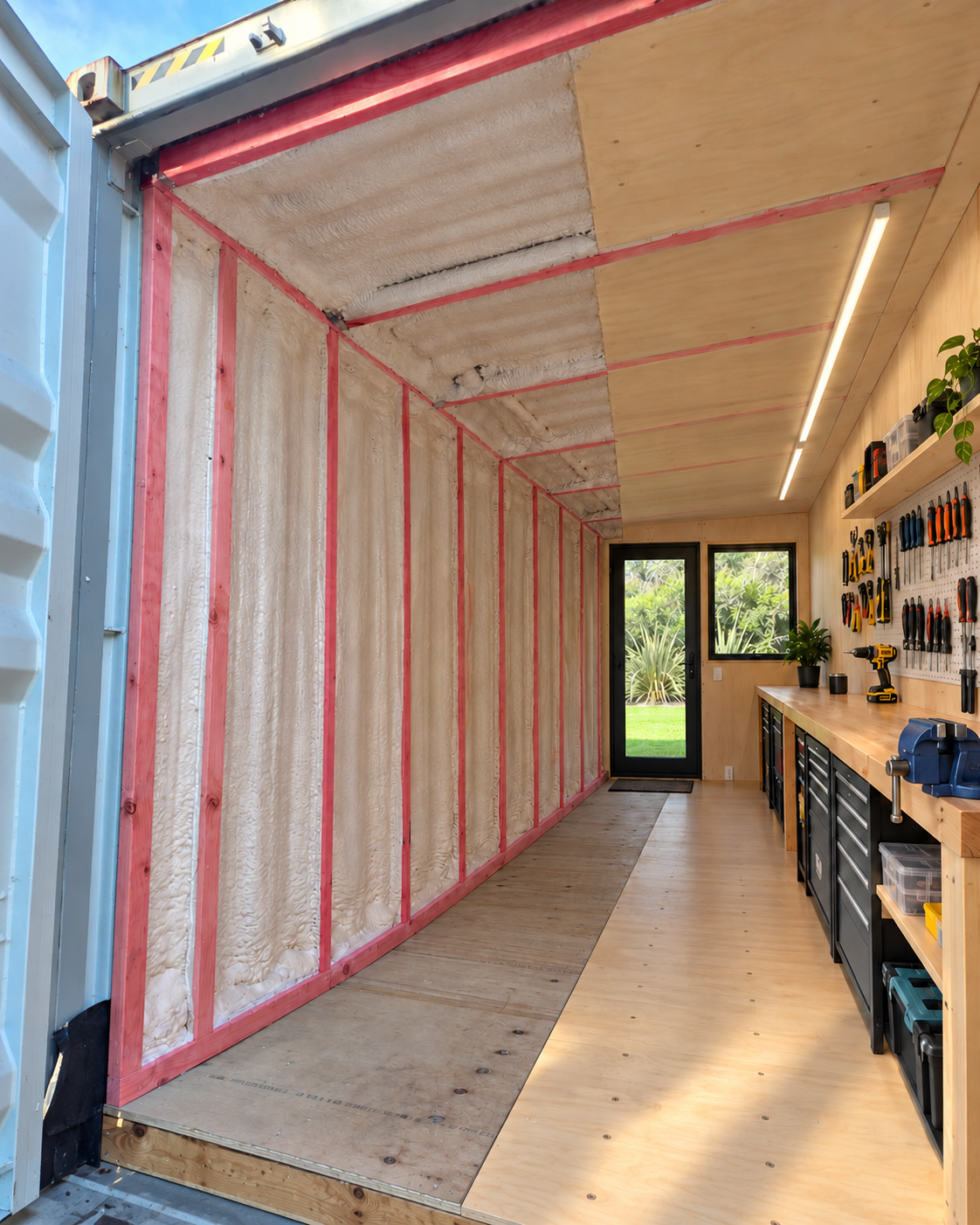
Workshops, offices & site offices
Discuss the space, surfaces and fit-out before benches, wiring and linings are installed.

Specialist spaces
Grow rooms, mushroom rooms and other climate-controlled spaces. Plan insulation alongside ventilation, humidity and temperature control.
Interior concepts are illustrative. Finished fit-outs are shown as ideas, not completed LJ Solutions conversions.
Storage containers: tell us what you are storing, the container size and how often it is opened. We can assess the insulation and moisture-control requirements.
Why use spray foam for containers?
Spray foam does more than put insulation in the walls. It bonds directly to the steel, seals to the framing and fills gaps. You get a continuous seal and high insulation performance without taking up much space.
Polystyrene and rigid foam boards may look similar, but fitted sheets do not automatically seal to the steel. Gaps can let moist air reach the cold surface behind them. Spray foam combines insulation with a direct bond and a continuous seal—making it a particularly strong choice for containers.
Direct bond
Foam adheres to the prepared steel rather than leaving an air space behind fitted sheets.
Continuous seal
It seals around framing and awkward junctions, helping control air movement to cold surfaces.
Space-efficient insulation
Closed-cell foam provides high insulation performance for its thickness, making good use of limited space.
Does spray foam stop container condensation?
It helps prevent it. Closed-cell foam bonds to the steel and seals off the air paths that let moisture reach the cold surface.
That direct bond gives it an advantage over fitted insulation with gaps behind it. The right thickness, full coverage and ventilation help keep the container dry.
What causes the droplets?
After a cool night, the steel can stay cold as the air warms. When moist air touches steel below its dew point, water droplets form—like on a cold drink. Roof droplets can collect and drip inside. Repeated dampness can affect stored items and encourage mould.
Choose the thickness your project needs.
We install to the thickness required for the application and generally recommend 40 mm or more for the best results.
More foam adds insulation, but each additional layer generally delivers a smaller reduction in heat loss. Beyond 125 mm, the extra benefit may be modest for your container. We help balance performance, space and cost.
NZ R-value vs overseas R-value
Both describe how well insulation resists heat flow. NZ uses metric R-values, also called RSI. US figures use a different scale, so the number looks higher: NZ R2.2 is about US R12.5. To compare, multiply the NZ value by 5.678. Other countries may use metric values too—check the units.
Read about R-value and RSI| Foam thickness | RSI / NZ R-value |
|---|---|
| 40 mm | 1.76 |
| 50 mm | 2.20 |
| 75 mm | 3.30 |
| 100 mm | 4.40 |
| 125 mm | 5.50 |
| 150 mm | 6.60 |
Heatlok HFO High-Lift foam-only guide, calculated at RSI 1.1 per 25 mm. Framing affects the finished wall or roof value. Confirm the current product specification and suitable build-up when quoting.
Can you add other insulation? Yes.
Once the spray foam is installed, you can add batts or another insulation before lining. This adds insulation or sound absorption and helps keep the overall cost down.
Spray foam + batts
Closed-cell foam bonds to the steel and helps prevent condensation. Batts top up the insulation to suit your budget.
Closed-cell + open-cell foam
Closed-cell foam seals against the steel. Open-cell foam adds insulation and sound absorption over it.
We specify the foam thickness and added insulation together for condensation control. Sound absorption does not mean soundproofing.
See the foam before the fit-out.
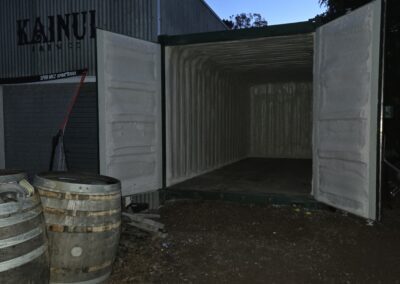
Continuous coverage
Insulation follows the container’s shape.
Roof & walls
The scope is agreed around the intended use.
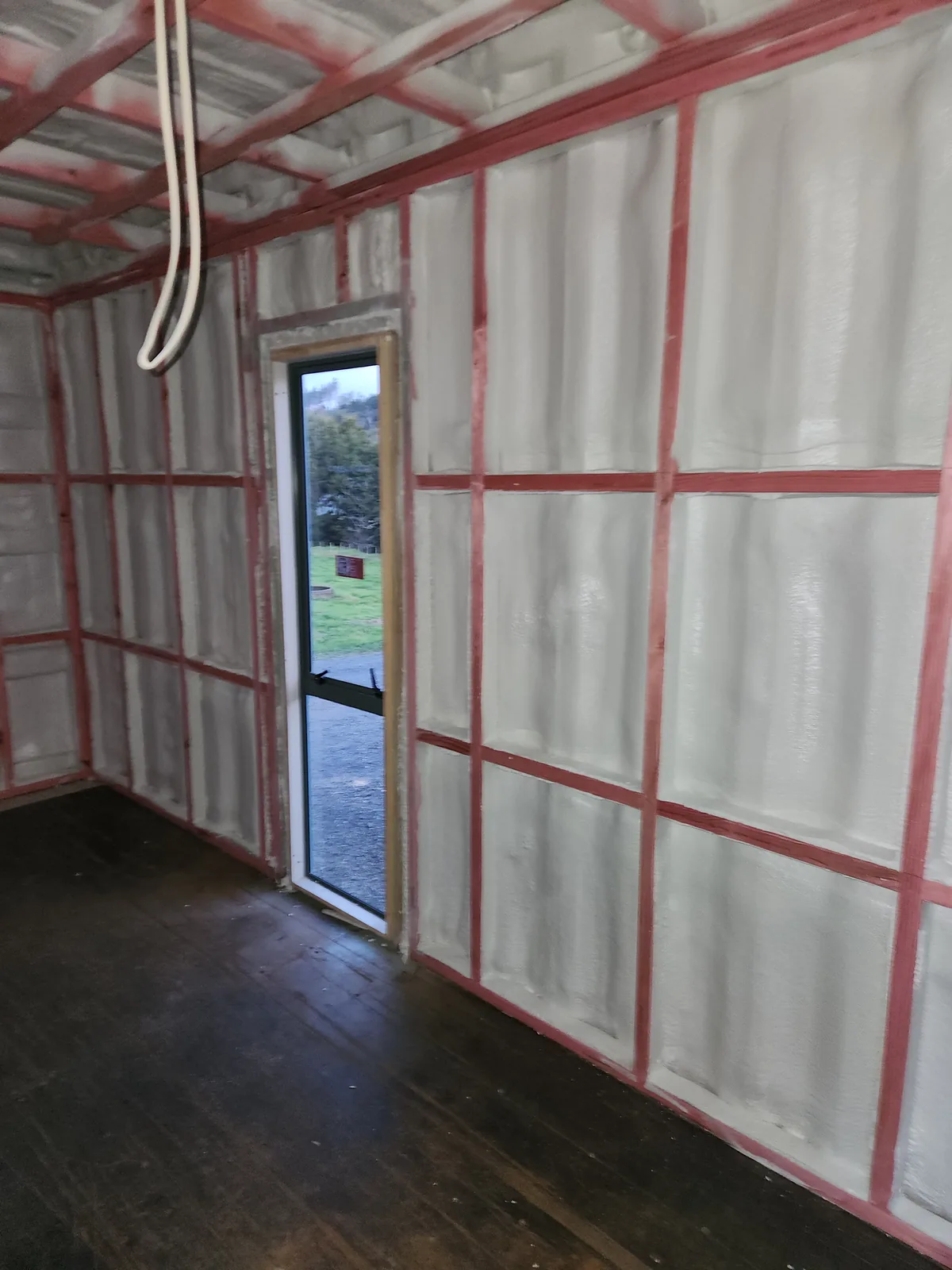
Ready for the next stage
Framing and linings are planned together.
You supply the container. We manage the conversion.
Source your container and arrange delivery to us. LJ Solutions can project-manage the conversion alongside the spray foam insulation.
Tell us what you want to create. We’ll agree the scope, required trades and any design or consent requirements before work starts.
Discuss your container conversionWhangārei, Northland, the Coromandel & further south.
Based in Whangārei, we cover Kaitaia, Northland, Auckland, the Coromandel and further south, including coastal communities. We travel nationwide for container insulation projects.
From the Bay of Islands and the Northland coast to Kaipara, the Hibiscus Coast and the Coromandel Peninsula, send us your location and we’ll confirm access and travel for your quote.
Need more than insulation?
We also offer chemical containment, protective coatings and waterproof membrane linings for containers. Discuss a suitable lining for your container’s use.
Request a container insulation quote.
Send the size, location and intended use. Add photos or plans if you have them.
Not sure what your container needs? We’re happy to talk through the preparation, framing and lining plans, and how to get the most from your insulation. Ask us before you start.
Want to talk it through?
Discuss preparation and what your container needs.
Call to discussLiam · 021 0227 8349